
February 2017
SMA together with its Strategic Partners – Deepcore Drilling, Geological Solutions and Nagrom are pleased to announce the successful drilling program and results of several mineralised complex zoned pegmatites within the Buchanan’s LCT Pegmatite Field.
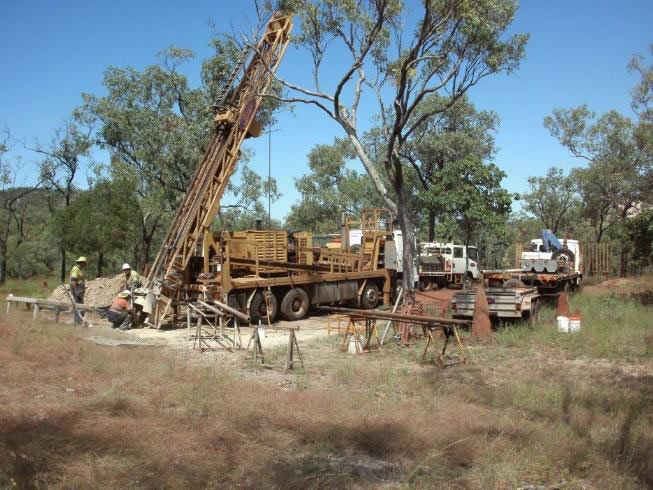
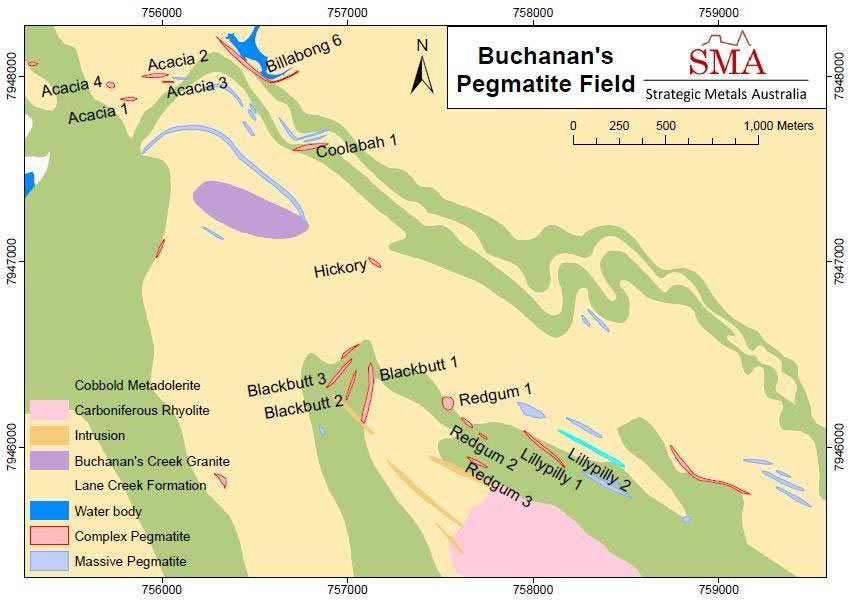
The drilling program focussed on evaluating two pegmatites (Coolabah 1 & Acacia 2), targeted for their lithium/tantalum potential. A total of fifteen (15) holes were drilled at Coolabah 1, five (5) holes at Acacia 2, one hole at Acacia 1, one hole at Acacia 3 and two (2) stratigraphic holes were drilled in between pegmatite Coolabah 1 & the Acacia group intersecting 2 separate Qtz-Feldspar-Muscovite pegmatites.
All holes drilled during the program were Diamond Core (HQ size) and were drilled to determine a JORC Compliant Resource. Drill hole spacing was typically on a 20m by 10 m spaced grid. Drill holes were located on the foot wall side of the mineralisation and drilled at a sixty (60°) angle perpendicular to the strike of the pegmatite, thereby providing as close to true thickness as possible.
A total of 24 HQ Core holes for a combine meterage of 636.23 metres were drilled during the program. The unconsolidated surface material such as soil was cased of using 6” Class VI PVC to a depth of around 1 to 6 metres into competent solid rock. And a total combined core loss of 42.27 m was experienced during the program, the average Recovery rate during the program was 91%.
All SMA Core holes were surveyed, including the Orion RC Collars, and all diamond drill core runs were orientated using a Reflex ACT 11 RD Orientation tool by the drill crew. The Supervising Rig Geologist reviewed and oversaw all core run orientation measurements.
Very little core orientations were obtained as the ground conditions down hole were generally quite poor due to faulted and broken ground, especially in the upper shallow sections of the holes. All angled diamond drill holes were downhole surveyed to obtain the deviation (dip, azimuth & temperature), using the gyroscopic method. Down-hole surveys were recorded at 15m intervals downhole and at Total Depth (‘TD’).
Core recovery was generally good with a combine loss of 42.27 m over the entire program. The average Core Recovery Rate during the program was 91%. All diamond drill core is photographed using a Sanyo 12.0 mega pixel colour digital camera.
All Diamond Core samples were sent to Nagrom Laboratory in Kelmscott where the following elements were tested on each sample:
Nb2O5, Ta2O5, SiO2, Fe2O3, Al2O3, TiO2, MnO, P2O5, SO3, MgO, CaO, K2O, Na2O, V2O5, CR2O3, CoO, NiO, CuO, ZnO, As2O3, PbO, BaO, Cl, SrO, ZrO2, Sb2O3, Sn2O3, moisture (LOI1000), F, Ga, Au, Ag & Li.
All core was photographed, geologically & geotechnically logged, sampled at 1 m intervals and orientated were possible, and all holes were downhole surveyed and surveyed at the end of the program.
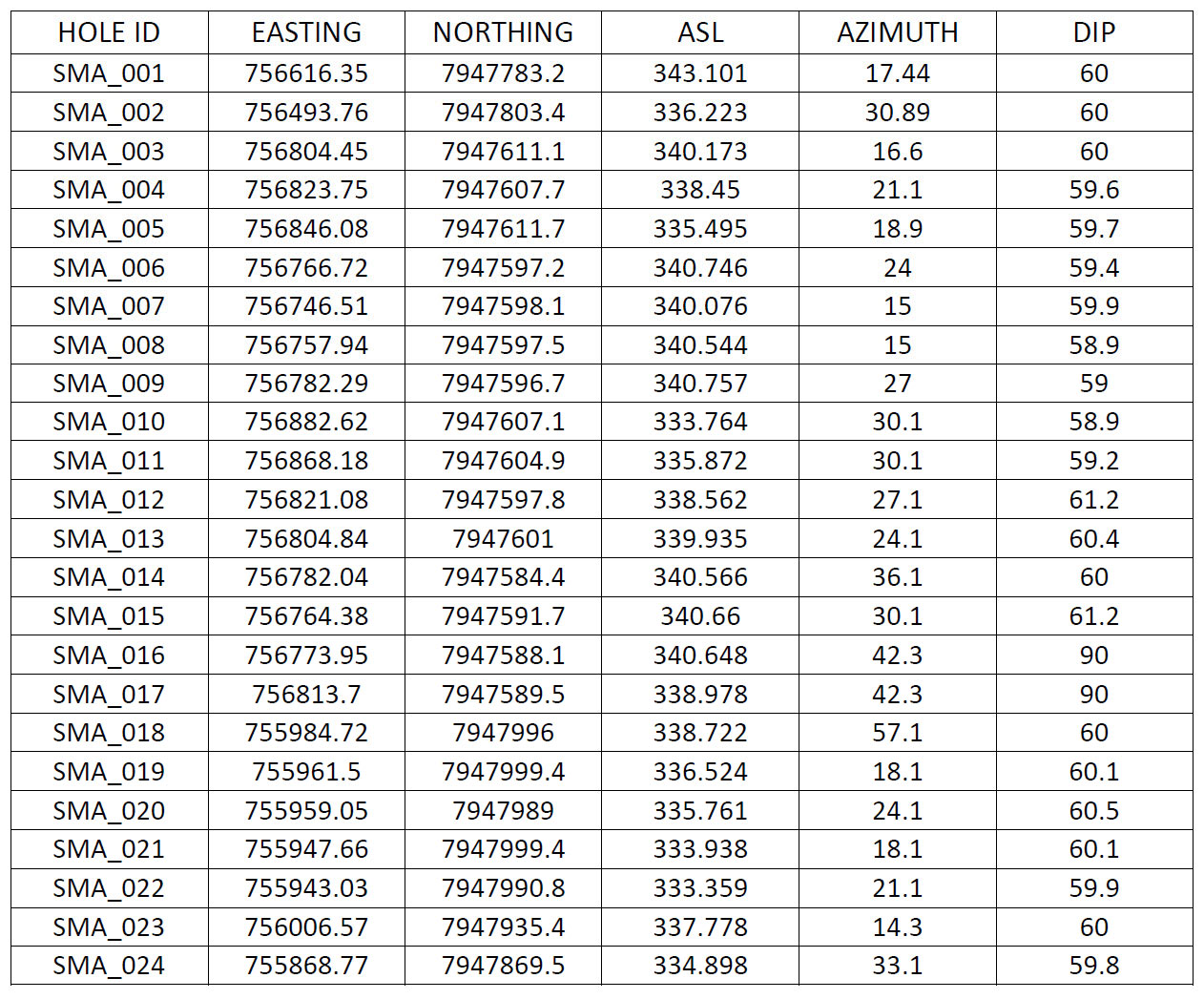
The below table displays the hole information such as location, ASL, Azimuth and dip of all holes drilled during the program:
The Laboratory analysis shows that the pegmatites are highly fractionated, zoned and highly anomalous in Lithium, Caesium, Tantalum, Tin and Gallium.
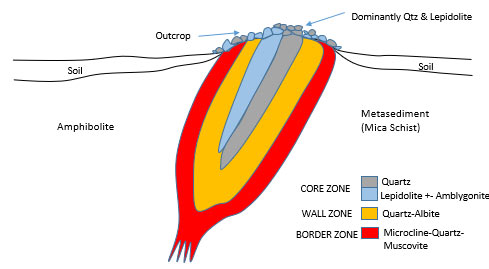
Analysis of the Diamond Core drill hole lithology suggests that Pegmatite 3 consists of 3 distinguishable pegmatite zones:
– Microcline-Quartz-Muscovite Border Zone
– Quartz-Albite Wall Zone
– Quartz-Lepidolite-Amblygonite Core Zone
Bradley Crighton
Director of Exploration
Strategic Metals Australia