
During April/May 2018, SMA hired a hand-held XRF Analysis (Bruker Titan XRF) from Portable XRF Services in order to test the applicability of the handheld XRF Analyser on Termite hills over its wholly owned Buchanans LCT Field. Testing and calibration of the Titan XRF was conducted using selected intervals from drill core obtained from the 2016 Drilling campaign and comparison with the known Lab assays from these intervals was completed. Following these initial promising results, a systematic survey of termite hills was undertaken in the Buchanan’s Creek LCT Pegmatite Field (Figure 1). Approximate north-south traverses were run every 100 m across part of the field acquiring a hand-held XRF reading and physical sample of termite hill at approximately 25 m spacing along the traverses. Locations were recorded using a hand-held GPS and notes were taken of the geology in the immediate vicinity. Opportunistic XRF measurements of outcrop and mineral specimens were also collected during the survey.
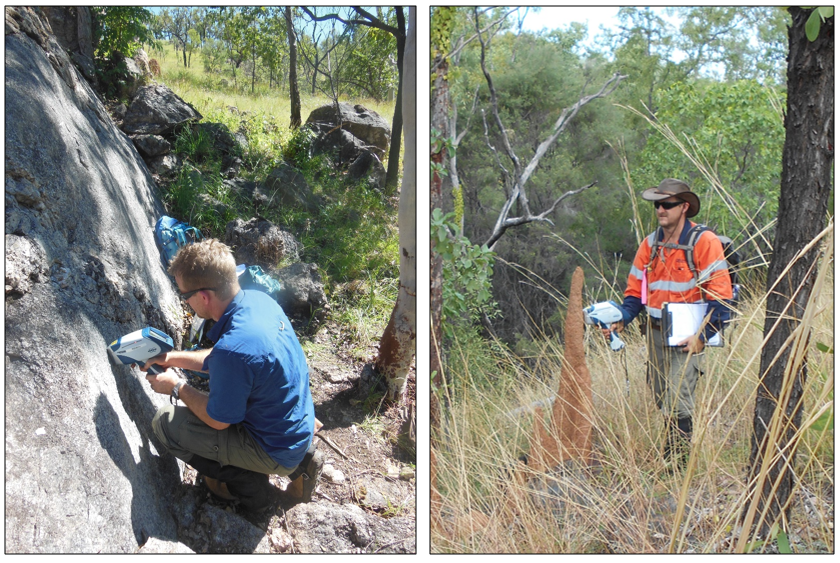
Figure 1 Hand-held XRF Measurements of Outcrop and Termite Hills.
A limitation of the hand-held XRF device is that it cannot measure lithium directly. Comparison of the assayed lithium in the termite hills with the results of the XRF shows that rubidium has a reasonable correlation with lithium in the survey area and may serve as an indicator to mineralization.
Sampled termite hills were divided into those that grow on amphibolite, metasediment, granite, pegmatite or a mix of these. Relationships were assessed on scatter plots; some elements reported higher results in the assays while others reported higher results in the hand-held device (Figure 2). Good separation between populations was observed in many element plots with rubidium in particular showing elevated values in the termite hills growing on pegmatite.
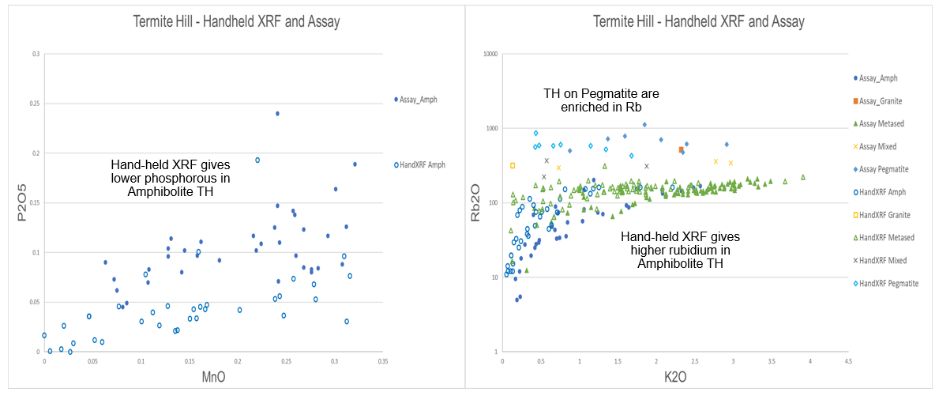
Figure 2 Hand-held XRF vs Assay in Termite Hills.
Direct comparison of the XRF and laboratory assay for each point shows a good correlation for some elements and no correlation for others (Figure 3).
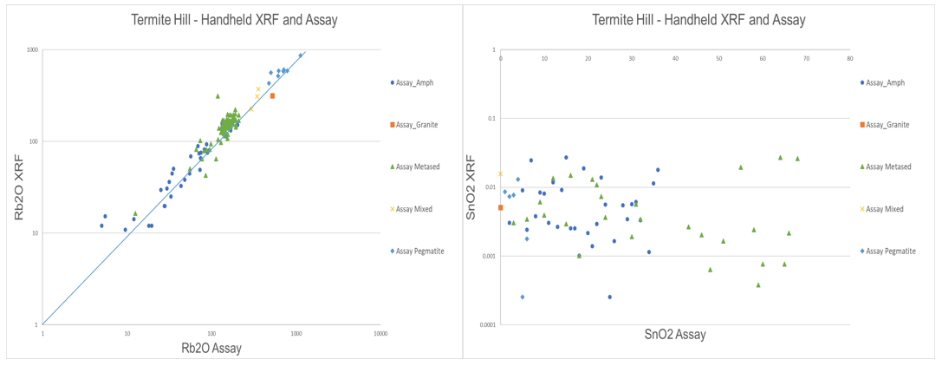
Figure 3 Hand-held XRF vs Assay in Termite Hills – correlation.
When the rubidium assay values are compared with the lithium assays there is a clear, but not perfect relationship between the 2 (Figure 4). Substituting the rubidium from the hand-held XRF we see the same distribution and conclude that rubidium is an indicator for lithium in the survey area.
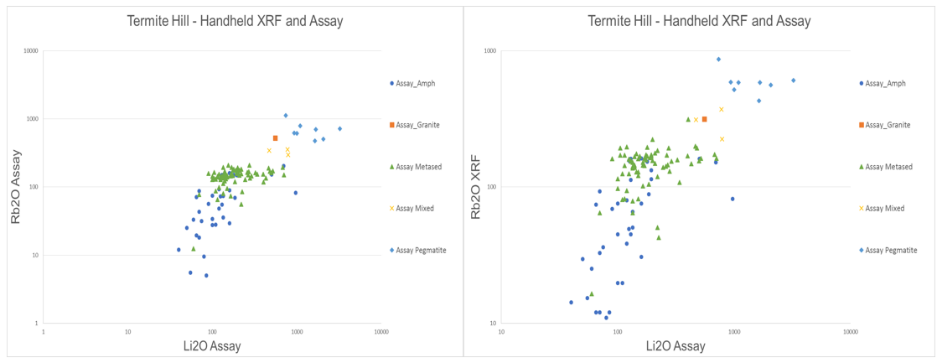
Figure 4 Hand-held XRF Survey of Termite Hills – Rb as proxy for Li.
When plotted spatially, these results provide an outstanding tool for recognizing potentially fertile pegmatites and, due to the penetration of the termites, has the potential for identifying buried pegmatites. Figure 5 shows the location of the termite hill survey with hand-held XRF results for rubidium at left and termite hill assay results for lithium at right. The large quartz blow mapped appears to be an LCT pegmatite!
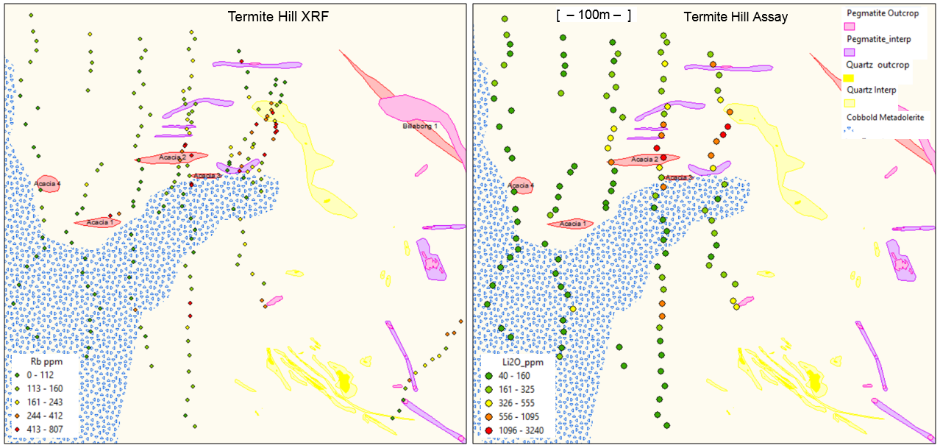
Figure 5 Hand-held XRF Survey of Termite Hills – Exploration Value.
As a result of this survey Strategic Metals Australia Pty Ltd conducted an intensive Termite Hill Sampling Program over part of the Buchanan Creek Dome during its 2019 Exploration Campaign. The results of this Program will be announced at the July 2019 WA Lithium Conference where SMA will be presenting a Presentation on the Buchanans LCT Pegmatite Field. It is expected that the results will help define drilling targets for future drilling.
Bradley Crighton
Director fo Exploration
Strategic Metals Australia